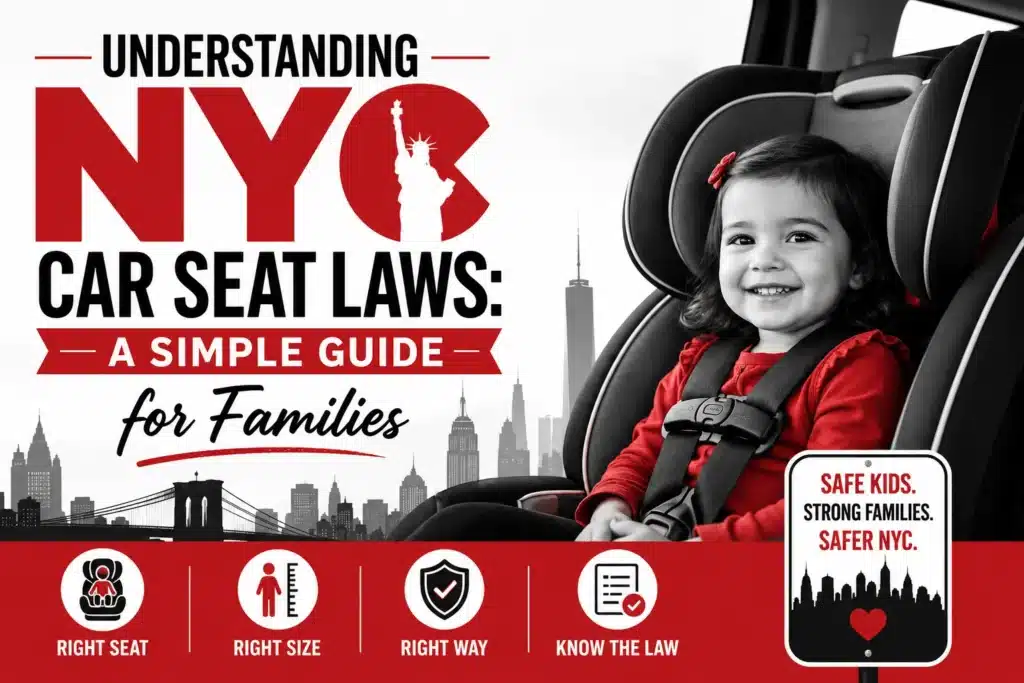
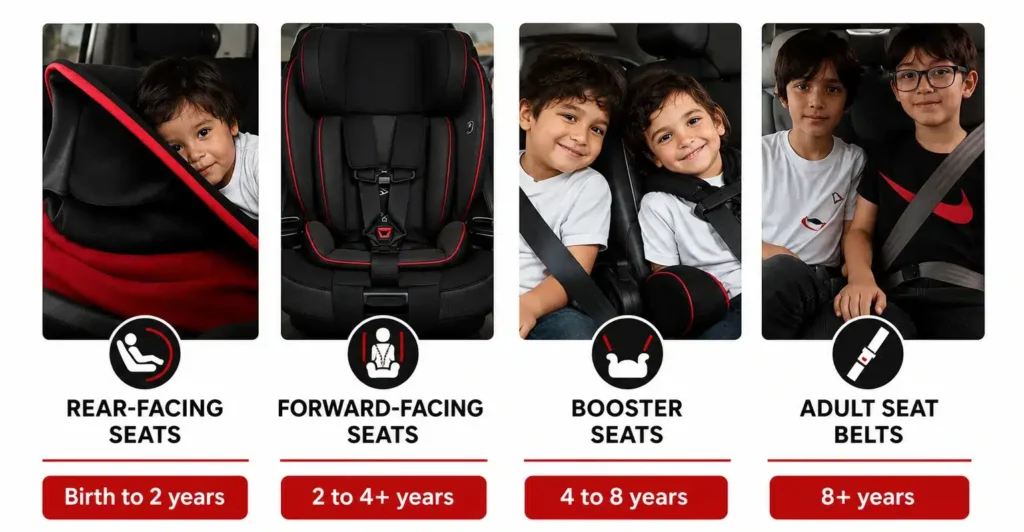
Ensuring your child’s safety while traveling is paramount, and understanding NYC Car Seat Laws is crucial for every parent and caregiver. These laws, encompassing the broader child safety seat requirements in New York State, are designed to protect young passengers. Child seat laws mandate the use of rear-facing car seats for infants until they exceed the weight and height limits set by the car seat manufacturer.
As the child grows, they transition to forward-facing car seats and later to booster seats. Booster seat laws specify that booster seats must be used until the child is 8 years old or 4’9″ tall, ensuring the seat belt fits properly with the lap belt across the upper thighs and the shoulder belt across the chest. Seat belts are required for older children and small adults, with a focus on the proper use of lap and shoulder belts.
Car accidents can result in serious or fatal injuries if children are not correctly restrained using these systems. It’s crucial that car seats, including built-in child seats, are properly installed and used according to both the seat’s manufacturer guidelines and New York State laws. Failure to comply with car seat laws can result in fines, driver violation points, and increased risk of injury during a motor vehicle crash. Parents can seek free consultations at fitting stations to ensure their child’s safety seats are properly installed.
Quick Reference: NY Car Seat Requirements by Age
| Age | Seat Type | Position | Key Rule |
| Birth – 2 years | Rear-facing car seat | Back seat only | Stay rear-facing until age 2, and the manufacturer’s weight/height limit is reached |
| 2 – 4 years | Forward-facing with harness | Back seat | Use until the manufacturer limit (~65 lbs), do not rush this transition |
| 4 – 8 years | Booster seat | Back seat | Required until age 8 or 4’9″ tall, whichever comes later |
| 8 – 12 years | Seat belt | Back seat recommended | Lap belt across upper thighs, shoulder belt across chest, not the neck |
| 13+ years | Seat belt | Any seat | Standard seat belt applies |
Keeping children safe in vehicles by using the appropriate safety restraints significantly reduces the risk of serious injury or fatality in the event of a car accident. When traveling with children, understanding car seat and booster seat laws is essential, especially when using a car service with car seats in NYC.
Under NYS car seat laws, children under 8 must use an appropriate car or booster seat, including in taxis, aligning with New York car seat laws for taxis. Similarly, booster seat laws in New York emphasize proper restraint based on age, height, and weight.
Car seat laws vary by state. If you are traveling with children outside of New York, always check the specific car seat and booster seat requirements for your destination state before your trip, as age, height, and weight thresholds differ. The NHTSA maintains an up-to-date guide to car seat laws by state at nhtsa.gov.
NYC Car Seat Laws by Age: Requirements, Safety Guidelines & Legal Rules
In New York State, children under 8 years old must use a child restraint system that suits their age, height, and weight. These include rear-facing car seats, forward-facing car seats, booster seats, and built-in child safety seats.
- Rear-Facing Car Seats: Infants and toddlers under 2 years should use a rear-facing car seat until they reach the maximum weight or height limit set by their seat’s manufacturer, typically 22 lbs for infant-only seats. It will provide optimal support for their head, neck, and spine. These seats are generally installed in the back seat to enhance safety.
- Forward-Facing Car Seats: After outgrowing the rear-facing seat, typically around age 2, children transition to forward-facing car seats with harnesses. These seats are used until the child reaches the manufacturer’s weight or height limit. Many seats accommodate up to 65 lbs, which can mean staying harnessed well into ages 5–7 or beyond.
- Booster Seats: For children aged 4 to 8 years or under 4’9″ in height, booster seats ensure proper seat belt fit. A booster seat positions the child so the lap belt lies across the upper thighs and the shoulder belt rests across the chest.
- Seat Belts for Older Children: Children 8 years and older, who meet height and weight guidelines, can use standard seat belts. The lap belt must fit snugly across the thighs and the shoulder belt across the chest to provide full protection.
- Back Seat Recommendation: Children under 13 are encouraged to ride in the back seat, reducing their risk of injury from front-seat airbags and other potential hazards.
- Proper Installation and Inspection: Ensuring correct car seat installation is crucial. Many local resources, including fire departments and police stations, offer free inspections by certified technicians to help caregivers meet these standards.
- Legal Penalties for Non-Compliance: Violating NYC car seat laws can result in fines between $25 and $100, plus 3 points on the driver’s license. Parents can reduce these risks by visiting fitting stations to confirm proper car seat installation.
- Car Seat Laws for Taxis and Rideshares: NYC taxis are generally exempt from car seat laws, though drivers must allow parents to install their own seat if brought. Rideshare vehicles operate in a legal gray area, but well-known rideshare companies require children to ride in an appropriate car seat regardless.
By adhering to these laws, parents can provide a safe travel environment for their children while remaining compliant with state regulations.
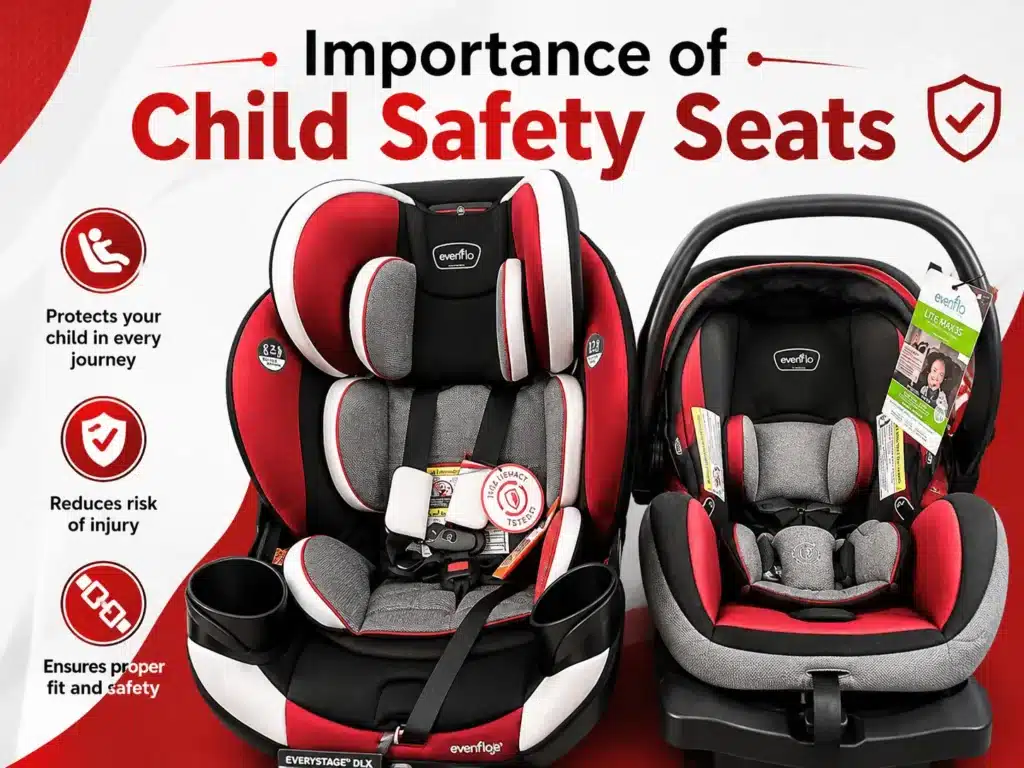
Importance of Child Safety Seats
Car seats are crucial for reducing the risk of injury in motor vehicle accidents. According to the CDC, car seat use reduces the risk of injury in a crash by 71–82% for children compared with seat belt use alone. NHTSA estimates car seats reduce fatal injury risk by 71% for infants and 54% for toddlers. NYC car seat laws reinforce the following benefits:
- Crash Protection: Child seats absorb impact during collisions, preventing children from being thrown around the vehicle.
- Age-Appropriate Safety: Car seats are specifically designed for different developmental stages, from rear-facing seats for infants to booster seats for older children.
- Legal Requirements: Complying with child safety seat laws protects your child and prevents legal penalties.
- Educational Support: Many organizations offer free resources to help parents understand car seat safety, including inspection services for proper installation.
- Technological Advancements: Car seats now feature improved materials, installation techniques, and enhanced safety features.
What’s New in 2026: Updated Federal Car Seat Standards (FMVSS 213a)
Beginning December 5, 2026, all car seats and booster seats sold in the United States must meet new federal side-impact safety standards under FMVSS 213a. These updated standards require seats designed for children under 40 pounds to be tested in a simulated 30 mph side-impact crash, closing a major safety gap, as car seats were previously only tested for front-end collisions.
If your current seat has not yet expired, you do not need to replace it immediately. However, any new seat purchased after December 5, 2026, must meet the updated standard. If you are unsure whether your seat is compliant, contact the manufacturer directly.
Types of Child Safety Seats
There are various types of child safety seats, each tailored to meet the unique needs of children at different growth stages:
1. Rear-Facing Car Seats
-
- Infant Car Seats: Designed for newborns up to approximately 22 lbs and 25 inches. For larger infants, convertible seats can be used rear-facing up to 40–50 lbs.
- Convertible Car Seats (Rear-Facing Mode): These seats accommodate children from birth up to around 40-50 pounds, then convert to forward-facing.
2. Forward-Facing Car Seats
-
- Convertible Car Seats (Forward-Facing Mode): After reaching rear-facing limits, children can use the forward-facing configuration, suitable for ages 2 and up to around 65 pounds.
- Combination Seats: These seats function as forward-facing seats with a harness and can later convert to booster seats by removing the harness.
3. Booster Seats
-
- High-Back Booster Seats: These seats provide head and neck support for children who have outgrown forward-facing seats.
- Backless Booster Seats: For older children, these ensure the seat belt fits correctly over the shoulder and lap.
4. Specialty Seats
-
- Travel Systems: These are combinations of an infant car seat and a stroller, simplifying the transition from car to stroller.
- Special Needs Car Seats: These provide additional support for children with unique medical or physical needs.
5. All-in-One Car Seats:
These versatile seats can transition from rear-facing to forward-facing and then to a booster seat, accommodating children from birth to around 100 pounds.
Quick Review: Types of Car Seats at a Glance
| Seat Type | Weight Range | Age Range | Key Feature |
| Infant-only seat | Up to 22 lbs / 25 inches | Birth – ~12 months | Portable, attaches to base, rear-facing only |
| Convertible seat (rear-facing) | Up to 40–50 lbs | Birth – 2+ years | Stays rear-facing longer than an infant seat |
| Convertible seat (forward-facing) | 22 – 65 lbs | 2 – 5 years | Transitions from rear to forward-facing |
| Combination seat | 22 – 65 lbs (harness) / up to 100 lbs (booster) | 2 – 8 years | Works as a harness seat, then converts to a booster |
| High-back booster | 40 – 80 lbs | 4 – 8 years | Provides head and neck support |
| Backless booster | 40 – 100 lbs | 4 – 12 years | For older children, position the belt correctly |
| All-in-one seat | Birth – ~100 lbs | Birth – 10+ years | Rear-facing, forward-facing, and booster in one |
Car Seat Safety Guidelines
Follow these guidelines to maximize the effectiveness and safety of child car seats:
- Avoid Used Car Seats: Used car seats may have unknown histories, including recalls or previous accident involvement.
- Observe Expiration Dates: Materials degrade over time; check expiration dates on car seats.
- Winter Clothing Precautions: Avoid bulky clothing under the harness; use blankets over the harness instead.
- Back Seat Placement: The back seat is safest for children under 13. Placing the seat in the center of the back row, if possible, further reduces risks.
- Regular Inspections: Routinely check for damage, wear, and correct installation.
- Educational Resources: Use resources like car seat inspection stations or child passenger safety technicians for guidance.
Penalties and Exemptions
In New York City, the laws regarding the use of car seats are stringent to ensure the safety of young passengers. The penalties for non-compliance and any exemptions to these rules are outlined as follows:
Penalties for Not Using a Car Seat
| Violation | Fine | License Points | Additional Consequence |
| Child not in proper restraint (under 16) | $25 – $100 | 3 points | Possible mandatory safety program |
| General seat belt violation | Up to $50 | 3 points | — |
| Repeat violations | Up to $100 per offense | 3 points per offense | Insurance premium increase |
| Non-compliance in taxi/rideshare | Parent responsibility | — | The driver must allow the car seat installation |
Exemptions to Car Seat Laws
Certain situations offer exemptions:
- Public Transportation: Buses and school buses are exempt.
- Taxis and Rideshares: NYC taxis are generally exempt from car seat laws, though parents are encouraged to bring their own seat.
- Medical Exemptions: With written authorization from a licensed physician, children with certain medical conditions may receive exemptions.
- Emergency Situations: Certain emergencies may provide temporary exemptions.
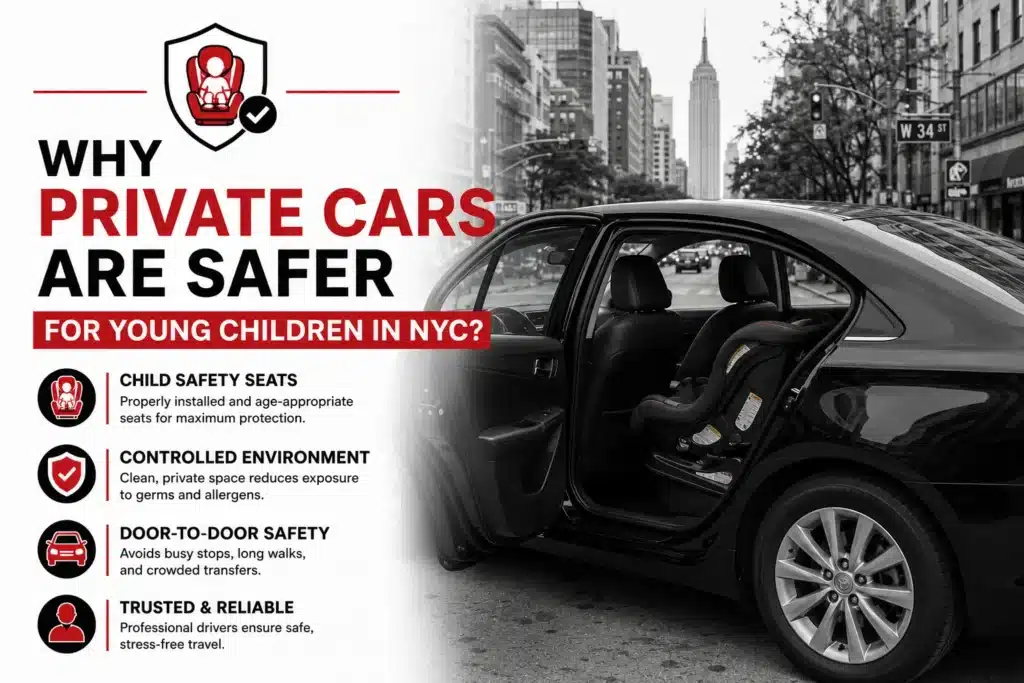
Why Private Cars Are Safer for Young Children in NYC?
While NYC offers many transportation options, traveling in a private car remains the safest choice for families with young children. Taxis and rideshares in NYC are legally exempt from car seat requirements, meaning your child has no guaranteed protection in these vehicles unless you bring your own seat.
In a private car, you control the installation, the seat type, and the safety standards, giving your child the maximum protection that NYC law and NHTSA guidelines recommend. For families who frequently travel with young children, investing in a reliable private vehicle with a properly installed, age-appropriate car seat is the single most effective way to keep your child safe on NYC roads.
Keeping Your Child Safe on NYC Roads: Every Trip, Every Time
Understanding and following NYC car seat laws is not just a legal obligation. It is the most important safety decision you make for your child every time you get in a car. From choosing the right rear-facing seat for your newborn to transitioning to a booster at age 4, every stage of your child’s growth comes with specific requirements designed to minimize injury in the event of a crash.
Stay up to date with the latest federal standards like FMVSS 213a, regularly inspect your seat for damage or expiration, and never hesitate to visit a free NYC car seat inspection station if you are unsure about your installation. When it comes to your child’s safety, there is no room for shortcuts.
FAQs About NYC Car Seat Laws
1. What is the car seat law in New York City?
A: New York law requires all children under age 8 to be secured in an appropriate child restraint system.
2. When should a child use a rear-facing car seat?
A: Children under age 2 must ride in a rear-facing car seat, or until they reach the maximum weight or height limit set by the seat’s manufacturer, whichever comes first.
3. When can a child switch to a forward-facing car seat?
A: After age 2, children can move to a forward-facing car seat with a harness.
4. When is a booster seat required?
A: Children ages 4–8 or under 4’9″ must use a booster seat. The booster positions the lap belt across the upper thighs and the shoulder belt across the chest.
5. When can a child stop using a car seat or booster?
A: At age 8, children can legally use a regular seat belt, though safety experts recommend waiting until the seat belt fits properly.
6. Can a child sit in the front seat in NYC?
A: It is legal but not recommended. Safety experts advise keeping children in the back seat due to airbag risks.
7. Do car seats need to meet specific standards?
A: Yes. All car seats must meet Federal Motor Vehicle Safety Standards and be installed correctly.