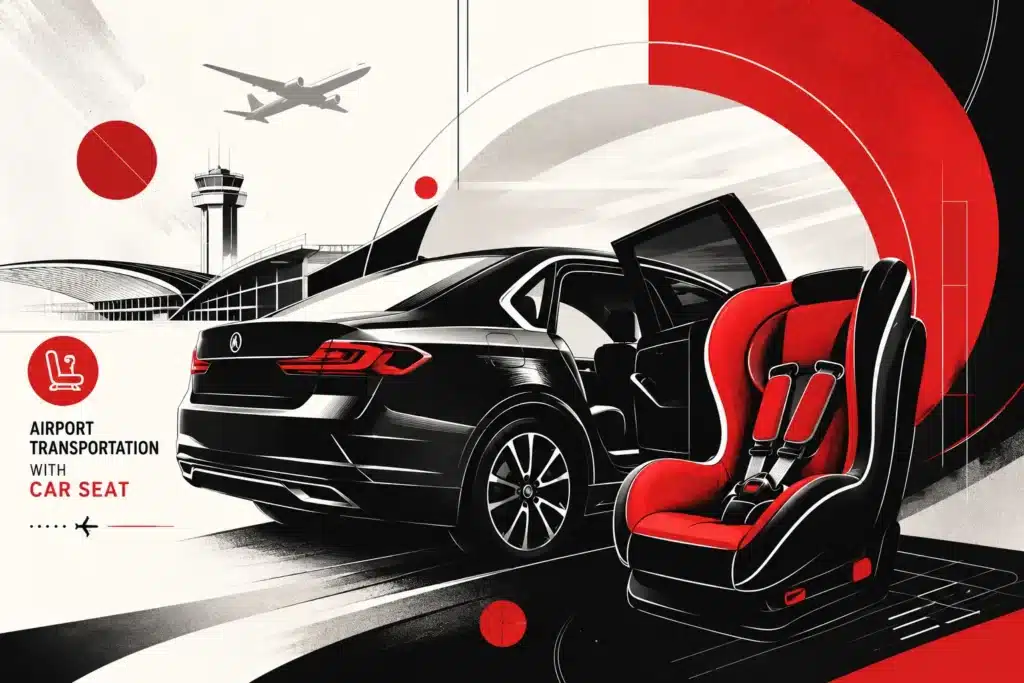
Many families prioritize ensuring their children’s safety during airplane travel and ground transportation when planning their next vacation. Whether flying to a destination or taking a taxi with a car seat, having the right car seat can make all the difference in ensuring a safe travel experience for your little ones. Know the best 7 Tips to Find Airport Transportation with Car Seats to make your travel hassle-free.
Using a car seat or travel stroller is one of the safest options for protecting infants and toddlers on flights and in rental cars. When flying with kids or toddlers, ensuring their safety and comfort is a top priority. Many car rental companies require car seats, making it essential to decide whether to bring your car seat or rent one at your destination.
A lighter car seat can reduce the hassle of carrying extra baby gear, especially when navigating the airport with a stroller and luggage. On a plane, securing a baby or little one in their seat with a shoulder belt is the safest option for air travel. Parents may need to reinstall car seats frequently during their trip, so choosing one that is easy to set up can make a family vacation much smoother.
Whether traveling by plane, car, or rental vehicle, ensuring the entire family can travel safely helps create a stress-free and enjoyable experience.
Best 7 Tips to Find Airport Transportation with Car Seats
From choosing the right FAA-approved car seat to understanding rental car policies and car seat installation, these seven tips will help you make smart, safe, and stress-free choices for your journey.
Tip 1: Choosing the Right Car Seat for Travel
The first mistake most parents make is grabbing their regular car seat without checking whether it’s suitable for air travel or easy enough to carry through a busy airport. Not all car seats are created equal for travel purposes.
What to look for in a travel car seat:
- FAA approval — Look for the label: ‘This restraint is certified for use in motor vehicles and aircraft.’ This is non-negotiable for use on a plane.
- Weight — Anything over 10 lbs will become exhausting fast. Lightweight travel seats like the CARES harness (1 lb) or Cosco Scenera Next (9.3 lbs) are popular choices.
- Ease of installation — You may need to install and uninstall the seat multiple times per trip. A seat with a simple lap-belt-only installation (no base needed) saves huge amounts of time.
- Size — The seat must fit in an aircraft seat (typically 17″ wide). Check your car seat dimensions before you fly.
If you’re flying with an infant under 2, you can technically hold them on your lap, but the FAA and pediatric safety groups strongly recommend purchasing a seat for your child and using an approved car seat, especially during turbulence.
Car Seat Type Comparison for Travel
| Car Seat Type | Best Age / Weight | FAA Approved? | Travel Ease | Best For |
| Infant (Rear-Facing) | 0–2 yrs / up to 35 lbs | Yes | Moderate — requires base or separate install | Newborns & babies |
| Convertible | 0–7 yrs / up to 65 lbs | Yes (most models) | Harder — heavier & bulkier | Families wanting long-term use |
| Lightweight Travel Seat (e.g., Cosco Scenera) | 1–4 yrs / up to 40 lbs | Yes | Easiest — light & compact | Frequent flyers |
| Aviation Harness (e.g. CARES) | Over 22 lbs / 1 yr+ | Yes (FAA-specific) | Easiest — fits in a pocket | Toddlers on planes only (not cars) |
| Booster Seat | 4–10 yrs / 40–100 lbs | Some models only | Easy — foldable options available | Older children in taxis & rentals |
Tip 2: Car Seat Installation for Air Travel and Taxis
Fumbling with a car seat installation in an airplane aisle with frustrated passengers behind you is not how you want to start your vacation. Practice at home, multiple times, before your trip.
On the Plane
- Car seats must be installed using the aircraft lap belt only. The LATCH system is not available on aircraft.
- Place the seat in a window seat to avoid blocking evacuation paths. This is an FAA requirement, not just a preference.
- The seat must face forward on the plane (even if your child normally uses a rear-facing seat in your car), unless the airline and seat manufacturer explicitly allow rear-facing.
- A locking clip may be required if the belt is a sliding type. Check your car seat manual.
In a Taxi or Rental Car
- Use the vehicle’s seat belt or LATCH system (whichever your seat supports).
- For children under 2, always use the correct seat position. Don’t switch just because it’s a rental.
- Always check that the seat is at the correct recline angle. Use the built-in angle indicator if your seat has one.
Before your trip, have your installation checked by a certified Child Passenger Safety Technician (CPST). The NHTSA offers a free inspection locator at nhtsa.gov. Take a photo of the correctly installed seat on your phone to show airline staff if questions arise.
Tip 3: Should You Bring a Car Seat or Rent One?
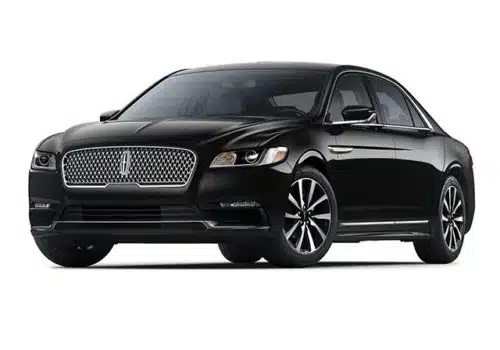
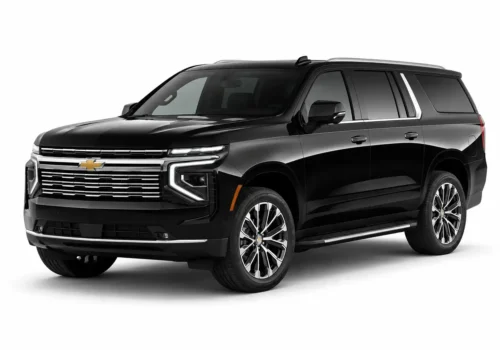
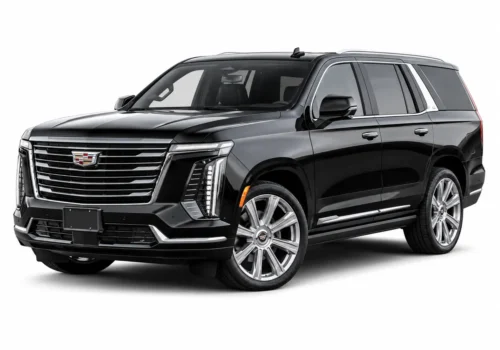
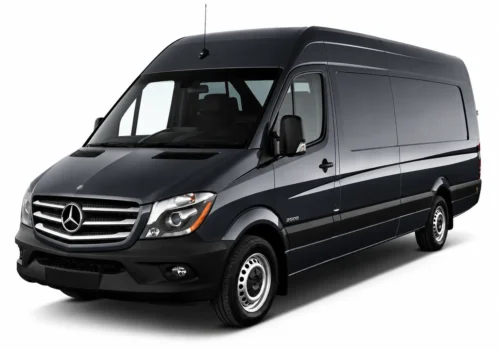
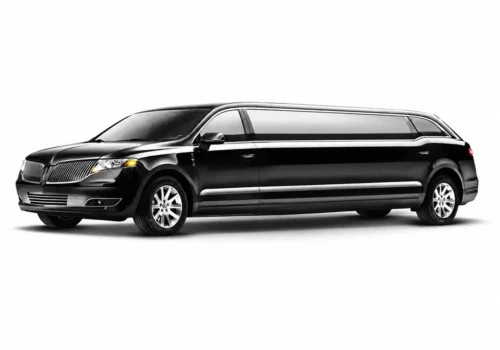
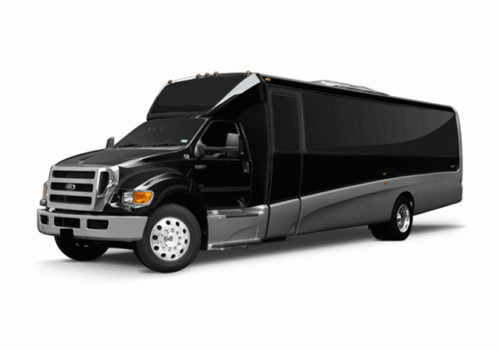
Whether to rent car seats or bring your own depends on how much space you have for carrying extra baby gear. If you’re traveling with toddlers and need a stroller, opting for a travel stroller that accommodates a car seat can be a good friend to families, making the trip much more manageable. Book with a limo or car service with affordable rates and car seat availability.
If you’re flying light, renting a car seat at your destination makes more sense than dragging a heavy car seat through the airport. However, always check the model, expiration date, and cleanliness before using a rented seat.
Bring Your Own vs. Rent a Car Seat
| Factor | Bring Your Own | Rent at Destination |
| Cost | Free (you already own it) | Typically $10–$25/day through car rental companies |
| Familiarity & Comfort | Your child is used to it — less fuss | The new seat may upset sensitive children |
| Hygiene | You know its history | Unknown — inspect carefully before use |
| Convenience | Heavy to carry through the airport | No extra luggage — travel light |
| Installation Confidence | You know how to install it correctly | You may be unfamiliar with the model |
| Condition Guarantee | You control maintenance & expiry | Risk of receiving worn or outdated seats |
| Best For | Safety-focused parents, infants, and long trips | Light packers, older children, short trips |
Tip 4: Book Airport Transportation with a Car Seat in Advance, Not on Arrival
One of the biggest mistakes families make is assuming they can sort out transportation at the airport. Taxis and rideshares almost never carry car seats. Showing up with a toddler and expecting a car seat to be available is a gamble you don’t want to take.
What to do instead:
- Search specifically for ‘airport car service with car seat’ or ‘child-friendly airport transportation’ in your destination city. Many private car services and limousine companies offer this as a booked add-on.
- When booking, specify your child’s age, weight, and height so the company provides the correct seat type (infant, convertible, or booster).
- Confirm the car seat type, model, and that it is FAA-approved or meets local safety standards.
- Ask whether the driver is trained in car seat installation; reputable companies will say yes.
- Book at least 48–72 hours in advance, especially during holidays or peak travel season.
- Get written confirmation of the car seat arrangement with your booking receipt.
Some services charge a small fee ($10–$20) for car seat provision. Factor this into your travel budget; it’s money well spent.
Tip 5: Plan Your Airport Strategy, Gate-Check or Carry On?
Once you’ve chosen your seat and booked transport, you need a plan for getting through the airport itself. Many parents don’t think this through until they’re standing at security with a stroller, a car seat, a carry-on, and a toddler.
Option A: Carry the Car Seat on the Plane
- Best if your child has their own seat on the flight.
- Use a car seat travel bag with wheels or backpack straps; your arms will thank you.
- Lightweight seats (under 10 lbs) can sometimes go in the overhead bin. Check dimensions first.
Option B: Gate-Check the Car Seat
- Free on most major airlines; check your airline’s policy.
- The seat goes in the cargo hold and is returned at the gate on arrival.
- Always use a padded, waterproof car seat bag to protect it from damage.
- Take photos of the seat’s condition before handing it over.
Option C: Check it with Luggage
- Riskiest option- seats can get damaged in the baggage hold.
- If you must check it, use a hard-shell bag and file a claim immediately if it is damaged.
Many travel strollers accept a car seat attachment, letting you push your child through the airport in their own seat without carrying extra weight. Popular combos include the Doona (car seat + stroller in one) and UPPAbaby MESA + RIDGE.
Tip 6: Know Your Airline’s Car Seat Policy Before You Arrive
Each airline has its own rules, and airline staff at the gate may not always have accurate information. Knowing the policy yourself prevents arguments and delays.
Key things to confirm with your airline before flying:
- Does the airline require an FAA-approved car seat label? (Most do, but check the specific wording required.)
- What is the maximum width allowed for a car seat on the aircraft?
- Is gate-checking the car seat free? Does it count toward checked baggage allowance?
- Can a rear-facing seat be used on this aircraft model?
- Is there a policy on where the car seat must be placed (window seat only)?
Carry-On Prep Checklist:
- Car seat manual (airlines can ask to see it)
- Take a photo on your phone of the FAA certification label on your seat
- Photo of correctly installed seat (in case of installation disputes at the gate)
- Boarding pass for your child’s purchased seat (if applicable)
Tip 7: Use a Pre-Travel Checklist to Stay Organized
Families who travel smoothly with young children aren’t just lucky; they plan obsessively. A pre-travel checklist removes mental load and ensures nothing falls through the cracks.
Complete Pre-Travel Car Seat Checklist
| Task | Category | Done? |
| Confirm the car seat has an FAA-approval label | Car Seat Safety | ☐ |
| Check the car seat expiry date (stamped on the seat body) | Car Seat Safety | ☐ |
| Inspect the seat for cracks, fraying straps, or damage | Car Seat Safety | ☐ |
| Have the installation checked by a CPST technician | Car Seat Safety | ☐ |
| Book a window seat for a child on the plane | Flight Planning | ☐ |
| Confirm airline car seat policy (width, placement, gate-check rules) | Flight Planning | ☐ |
| Purchase a car seat travel bag (padded & waterproof) | Gear & Packing | ☐ |
| Practice installation with lap belt only (airplane mode) | Installation | ☐ |
| Take a photo of the correctly installed seat for your phone | Documentation | ☐ |
| Pack the car seat manual in your carry-on | Documentation | ☐ |
| Pre-book airport transportation with a confirmed car seat | Transportation | ☐ |
| Confirm car seat type, model & driver training with the transport provider | Transportation | ☐ |
| Research car seat laws for your destination state/country | Legal Compliance | ☐ |
| Pack child essentials: snacks, toys, comfort blanket | Child Comfort | ☐ |
| Print all confirmations: boarding passes, rental docs, transport bookings | Documentation | ☐ |
Car Seat Safety by Age: What Every Parent Must Know?
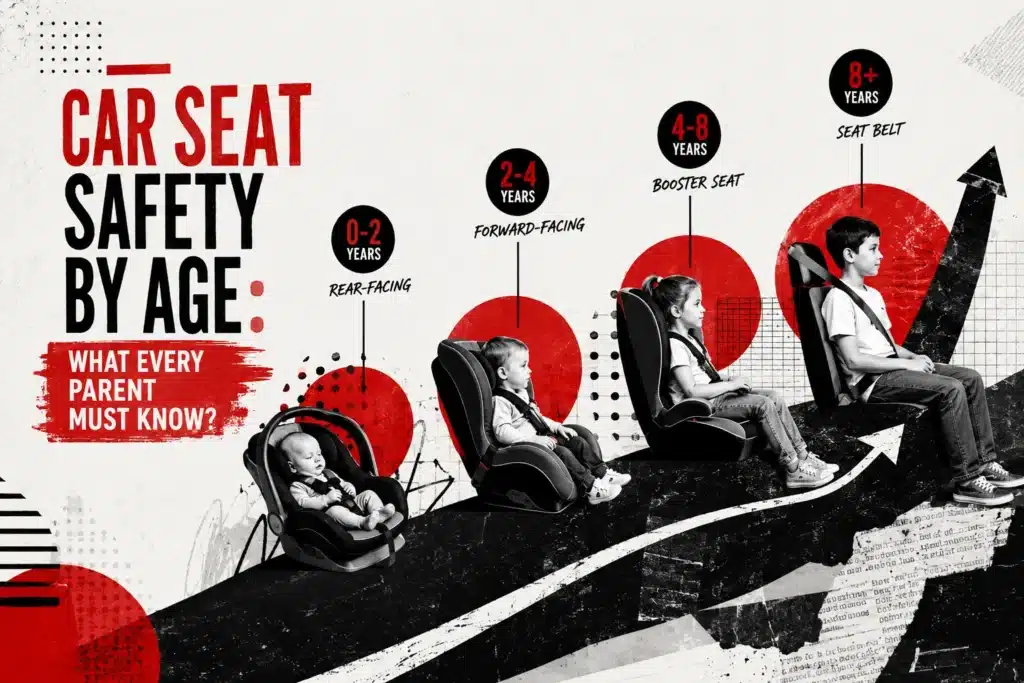
Every stage of your child’s development requires a different level of car seat protection. Many parents move their child to the next stage too early, which significantly reduces safety. Here’s what pediatric safety experts actually recommend:
- Newborns to 2 years — Always rear-facing, in an infant or convertible seat. Rear-facing distributes crash forces across the entire back, head, and neck, the most vulnerable areas in a newborn.
- 2 to 4 years — Forward-facing with a full harness. Keep children harnessed as long as the seat’s height and weight limits allow. Don’t rush to a booster.
- 4 to 8 years — High-back booster with a vehicle seat belt once they outgrow their harness seat. The belt must cross the shoulder, not the neck.
- 8 to 12 years — Backless booster or seat belt alone once the child reaches 4’9″ and the belt fits correctly across the chest and lap.
The golden rule: always follow the seat’s weight and height limits, not just the age guidelines. A large 3-year-old may be ready for forward-facing; a small 5-year-old may still be safer rear-facing. Let the seat’s limits guide you, not birthday candles.
One often-overlooked safety rule: never place a rear-facing car seat in front of an active airbag. In a crash, an airbag deploys with enough force to cause serious injury to a rear-facing infant. Always use the back seat.
Best Airport Transportation Options for Families
Not all airport transportation is family-friendly. Here’s an honest breakdown of your options so you can choose what works best for your situation:
1. Pre-Booked Private Car Service (Best Overall)
Hiring a private driver is the gold standard for families with young children. You confirm the car seat type in advance, the driver is trained, and there are no surprises. Slightly more expensive but worth every penny for peace of mind.
2. Car Rental with Your Own Car Seat (Best for Flexibility)
Renting a car for your family trip gives you total control over your schedule. Bring your own seat for guaranteed safety, or add a rental seat through the car rental company, but always inspect it thoroughly, as private car services provide higher quality, maintained seats than rental counters.
3. Hotel or Resort Shuttle (Best for Budget)
Some hotels offer family shuttles. Call ahead to confirm car seat policy; many shared shuttle buses cannot legally accommodate car seats due to seat belt availability. Private hotel transfers are usually a better option.
4. Rideshare Apps (Use With Caution)
Standard rideshare vehicles do not provide car seats. For rideshare situations, a RideSafer vest is a compact FAA-accepted alternative for children over 30 lbs. They offer a car seat option in select cities like New York, but availability is unreliable. Never assume a rideshare will have a seat; always confirm before booking.
5. Public Transportation — Buses & Trains (Situation Dependent)
Some cities allow car seats on public transit, others don’t. In many countries, buses don’t have individual seat belts, making car seat use impossible. Research your specific destination before counting on this option.
6. Airport Taxis (Last Resort)
Most taxis don’t carry car seats and are not required to in many states for children over a certain age. Laws vary significantly. Check your destination’s specific regulations before relying on a taxi with a young child.
Traveling Internationally with a Car Seat: What’s Different?
Domestic travel rules are one thing, international travel adds a whole new layer of complexity. If you’re flying abroad with young children, here’s what changes:
- FAA approval doesn’t apply internationally — Outside the US, look for ECE R44/04 or ECE R129 (i-Size) certification. These are the European safety standards accepted in most countries. Many US-certified seats also carry ECE certification; check the label.
- Car seat laws vary dramatically by country — In the UK, children must use a car seat until they’re 135cm tall or 12 years old. In some countries, regulations are far more relaxed. Always research your destination’s specific laws at gov.uk, europa.eu, or your destination country’s transport authority website.
- Seat belt availability abroad is not guaranteed — In some countries, taxis and minibusses may not have individual seat belts in the back. If a seat belt isn’t available, a car seat cannot be safely used. Research transportation infrastructure at your destination before relying on a car seat in local vehicles.
- Rental car companies abroad may not carry infant seats — International rental car companies are less consistent about car seat availability than US companies. Always confirm in writing and consider bringing your own seat on long international trips.
- Airlines have different policies on car seats internationally — Some international carriers restrict car seat use more tightly than US airlines. Contact the airline directly before flying and get their policy in writing.
- Shipping your car seat ahead is an option — For long international trips, some families ship their car seat to the hotel or destination address in advance using a courier service. This avoids airport handling damage and removes the burden of carrying it through multiple airports.
Final Thoughts:
Know the importance of traveling with a car seat and book airport transportation with a car seat today to ensure a smooth and worry-free trip for your family and little ones! Many families prioritize the safety of kids, toddlers, and little ones during air travel. Using a car seat, especially a child’s car seat, keeps babies and toddlers properly secured during a flight.
When flying with kids, especially toddlers or babies, bringing your own car seat ensures a safer and more comfortable journey. Purchasing your child’s own seat on the plane allows you to properly secure the car seat. Whether you’re a seasoned traveler or flying for the first time with little ones, having the right gear makes all the difference.
Parents often prefer placing their child in a window seat for added security. Whether flying with a stroller or carrying a car seat onto the plane, it’s essential to reinstall it correctly.
Putting the seat in the correct position ensures the child and parent have a safe and comfortable journey. Ensuring safety while flying with a baby or toddler requires the proper use of car seats. Whether securing a child’s seat on a plane, putting them in the appropriate position ensures a smooth and secure flight for both parent and child.
FAQs: Tips to Find Airport Transportation with Car Seats
Q1: Can I bring my own car seat on the plane?
Yes, but it adds stress as carrying, installing, and managing a car seat through a busy airport is exhausting. A private car service eliminates this hassle by providing an inspected car seat so you can travel hands-free from door to door.
Q2: Are there extra fees for car seats?
A: Some providers charge a small fee for car seat use, while others include it as a service. Always confirm upfront to avoid surprises.
Q3: Is it better to pre-book a car service with a car seat or get a taxi/Uber at the airport?
A: Pre-booking a private black car service is always the safest and most reliable option. Taxis and rideshare services often don’t carry car seats, and waiting at the airport with kids can be stressful.
Q4: How early should I book airport transportation with a car seat?
A: At least 48–72 hours in advance is recommended, especially during holidays or peak travel seasons, to guarantee the availability of the appropriate car seat.
Q5: Do all cities and states require car seats in airport transportation?
A: Laws vary by state, but most require car seats for children under a certain age or weight. It’s best to check local laws and confirm with your transportation provider.