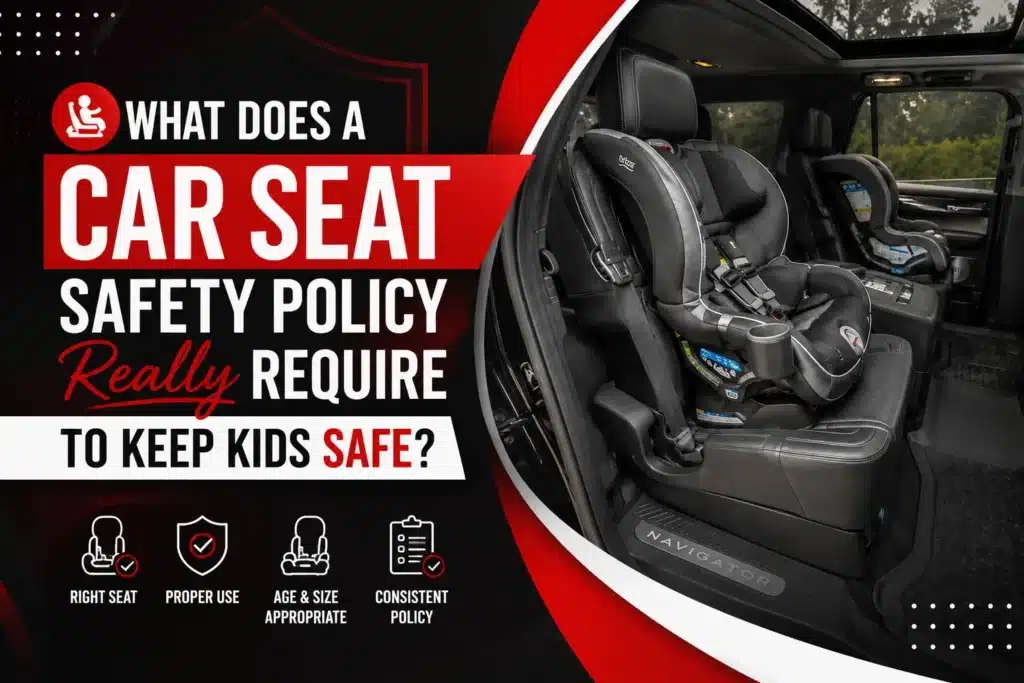
Every parent eventually asks the same question: What does a proper car seat safety policy actually look like in practice? Between federal standards, state laws, and manufacturer instructions, car seat safety can feel confusing. This guide breaks down what a car seat safety policy covers, how to choose the right car seat, and why following these rules helps keep children safe on every ride.
Understanding Car Seat Safety Policy Basics
A car seat safety policy rests on three layers: federal performance standards, state law, and manufacturer guidance. FMVSS 213 sets the minimum performance requirements every car seat must pass before sale, but it does not dictate how long a child must use one that falls to state law and families.
Starting from December 5, 2026, seats for children under 40 pounds must also pass an updated side-impact standard, though seats already in use will not need replacing immediately. Filling out the registration card that comes with a new seat helps manufacturers send safety updates and recall notices directly to owners.
Choosing a proper seat is not one-size-fits-all. Selection should be car seat-based on a child’s current weight and height rather than age alone, and families unsure about installation can visit a car seat inspection station, where certified technicians check that a child’s car seat is secured correctly.
A properly installed car seat should not shift more than an inch at the belt path, and many inspection events check this for free. Technicians can also confirm whether a seat’s height limit has been reached before recommending the next stage.
Why Car Seat Safety Matters for Every Car Seat?
Car crashes remain a leading cause of death for young children, which is exactly why car seat safety guidelines exist. According to the National Highway Traffic Safety Administration, a correctly used car seat offers the best protection available, reducing the risk of fatal injury by roughly 71% for infants and 54% for toddlers in passenger cars. The Centers for Disease Control and Prevention has also found that more than half of car seats and boosters are used incorrectly, which is why routine checks matter as much as the seat itself.
| Age Range | Recommended Seat Type | Key Guidance |
| Birth – 2 years | Infant seats or convertible car seats | Stay rear-facing until the seat’s height and weight limits are reached |
| 2 – 4 years | Convertible car seat, forward-facing | Move forward only after outgrowing the rear-facing limit |
| 4 – 7 years | Forward-facing car seat with harness | Keep the harness until the top height or weight limit |
| 8 – 12 years | Booster seat | Use until the seat belt fits properly without a booster |
| Typically 4’9″ tall | Seat belt only | Lap belt across the thighs, shoulder belt across the chest |
Booster Seat Rules Under Child Passenger Safety Guidelines
Once a child outgrows a forward-facing seat’s harness limit, a car seat or booster combination gives way to a booster seat alone. A booster raises a child so the vehicle’s seat belt sits over the shoulder and lap correctly instead of the neck or stomach. Experts generally recommend keeping children in a booster until they are 8 to 12 years old or about 4 feet 9 inches tall, since seat belt use designed for an adult body does not fit a smaller child safely on its own.
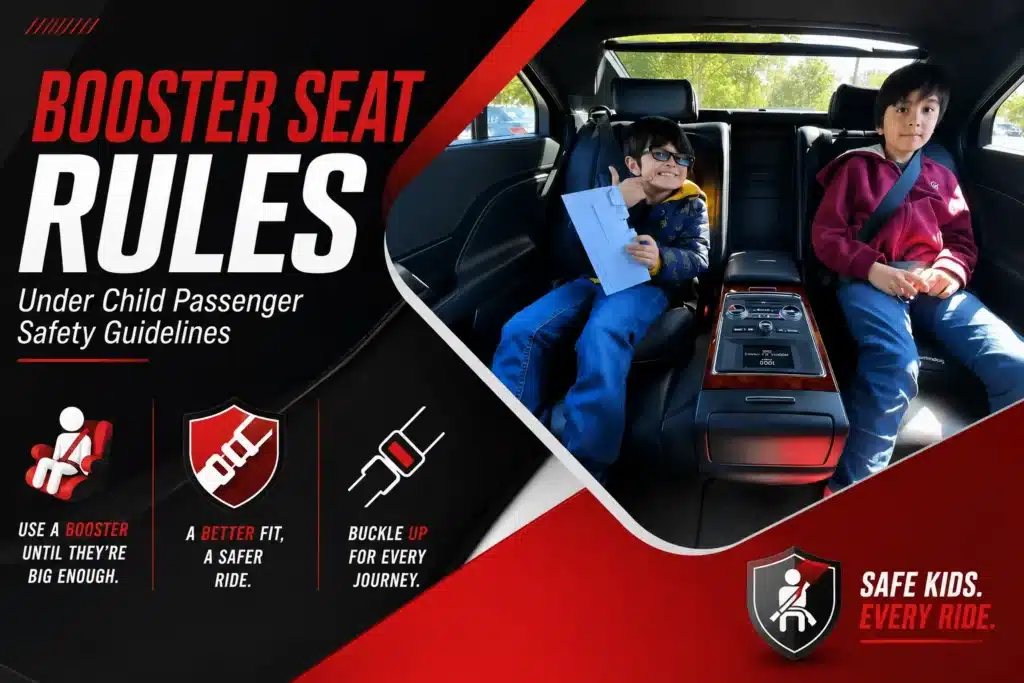
A seat belt fits correctly when the lap portion lies snugly across the upper thighs, and the shoulder belt crosses the chest without resting on the neck or face. Children who rely on either the seat belt alone too early, before graduating to a seat with a harness, face a greater risk of abdominal and neck injuries in a crash.
How Do Car Crashes Affect Child Passengers?
Child passengers are especially vulnerable in a collision because their heads and spines are proportionally different from an adult’s. A rear-facing seat cradles a child’s head, neck, and spinal cord and supports a baby’s shoulders during impact in a way no forward-facing position can, which is why children should not face forward until they outgrow the rear-facing limit.
The back seat remains safer than the front seat for children under 13, largely because it keeps them away from a deploying airbag; the one common exception involves certain pickup trucks without a usable back seat, where specific state or city car seat laws should be checked.
Unrestrained or improperly restrained child passengers face a significantly higher chance of serious injury. Common mistakes include loose harness straps, a low chest clip, and moving a child to the next seat type too soon.
Keeping Children Safe: What a Child Safety Seat Should Do?
A child safety seat is only effective when installed correctly and matched to a child’s current size. Every seat should be secured using either the lower anchors or a seat belt, never both, and forward-facing seats should also use a top tether when available. A properly fitted harness keeps the two straps snug at the shoulders, with flat, untwisted shoulder straps and the chest clip positioned at armpit level.
A harness should stay in use until a child reaches the seat’s highest weight allowed. Research from Safe Kids Worldwide points to loose harness straps and skipped tethers as common installation errors, worth a second check after buckling in.
| Seat Feature | Infant-Only / Rear-Facing Seat | Forward-Facing Car Seat | Booster Seat |
| Harness type | Five-point harness | Five-point harness, two straps at shoulders | Uses a vehicle seat belt |
| Anchoring method | Lower anchors or seat belt | Lower anchors or seat belt, plus tether | Vehicle seat belt only |
| Chest clip position | Armpit level | Armpit level | Not applicable |
| Primary protection focus | Head, neck, and spine | Limits forward movement | Position the belt over stronger body parts |
Regularly checking the owner’s manual for both the vehicle and most car seats confirms the setup stays correct as a child grows, since limits and harness slot positions differ between models.
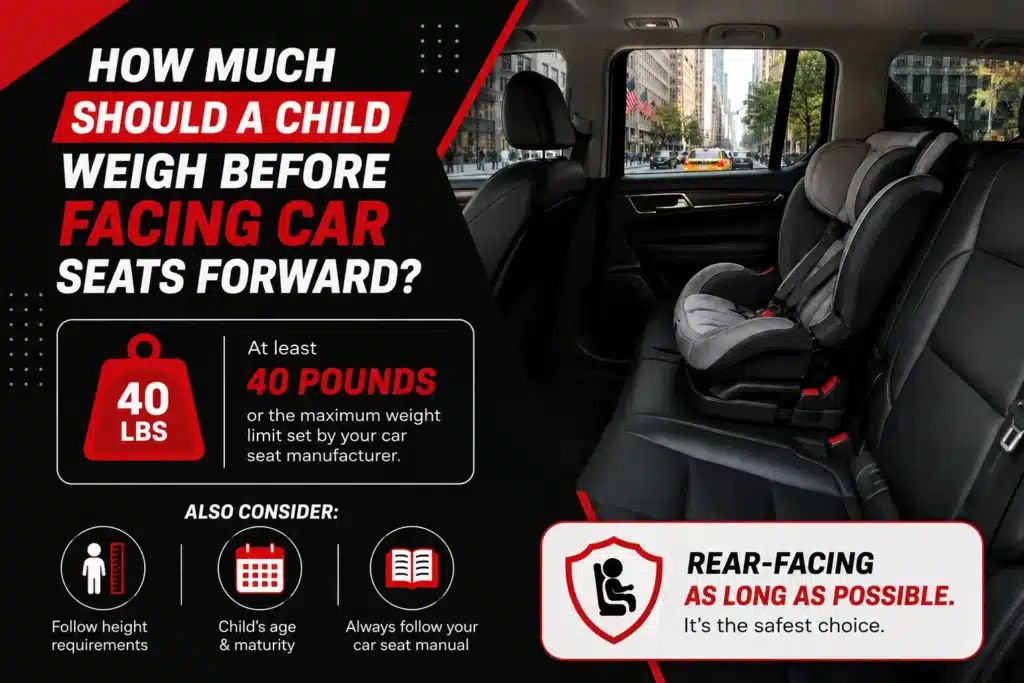
How Much Should a Child Weigh Before Facing Car Seats Forward?
Moving a child from rear-facing to forward-facing should be based on size, not simply a birthday. Most convertible seats allow rear-facing well beyond infant seats’ limits, and NHTSA recommends waiting until a child reaches the seat’s maximum weight or height limit and is at least two years old before switching. Moving too early reduces the protection a rear-facing position offers in a crash.
Keep Your Child Safe on Every Ride
A car seat policy for safety only works when followed consistently, not just when convenient. Choosing the proper seat for a child’s size, installing it correctly, and rechecking that fit as they grow help children remain safe more than any single product or feature. Because guidance evolves with new crash testing, revisiting the manufacturer’s instructions and any safety updates now and then is worthwhile.
That same standard extends beyond a family’s own car. Whether it’s a daily commute or a ride booked through a professionally driven car service for an airport transfer, keeping your child safe means checking the same things each time: is the seat right for their size, is it installed properly, and does the belt sit where it should?
Frequently Asked Questions
1. What is the safest seat type for infants?
A rear-facing car seat is safest for infants because it supports the head, neck, and spine.
2. When should a child move to a forward-facing car seat?
Only after outgrowing the rear-facing seat’s height or weight limit, typically around age two.
3. How long should a child use a booster seat?
Generally, until age 8–12 or until they reach about 4 feet 9 inches tall.
4. Where should a car seat be installed?
In the back seat, using either the lower anchors or a seat belt, never both.
5. Does federal law require replacing older car seats?
No, updated side-impact standards apply to seats sold after December 5, 2026, not seats already in use.